
In today’s complex IT landscape, managing assets effectively is crucial for operational efficiency, security, and cost optimization. Gone are the days of relying solely on spreadsheets and manual tracking. Businesses need smarter, more integrated solutions that provide real-time visibility and control over their IT infrastructure. This is where the synergy between Customer Relationship Management (CRM) and Remote Monitoring and Management (RMM) systems comes into play, offering a powerful combination for enhanced IT asset management.
While CRM is traditionally associated with sales and marketing, its capabilities extend far beyond these departments. When integrated with RMM, CRM becomes a central hub for managing not only customer relationships but also the IT assets supporting those relationships. This integration provides a holistic view of the customer environment, enabling proactive support, faster issue resolution, and improved overall service delivery.
This article will explore how the combined power of CRM and RMM can revolutionize IT asset management, providing a comprehensive overview of the benefits, implementation strategies, and practical considerations for businesses looking to leverage this powerful synergy. We’ll delve into specific examples of how these tools work together to streamline IT operations, enhance security, and ultimately drive business growth.
Understanding the Basics: CRM and RMM
Before diving into the integration benefits, let’s define CRM and RMM individually.
What is CRM?
Customer Relationship Management (CRM) is a system for managing a company’s interactions with current and potential customers. It typically involves using technology to organize, automate, and synchronize sales, marketing, customer service, and technical support. A CRM system helps businesses build stronger customer relationships, improve customer retention, and drive sales growth. Key features of a CRM system include contact management, lead management, sales automation, marketing automation, and reporting & analytics.
What is RMM?
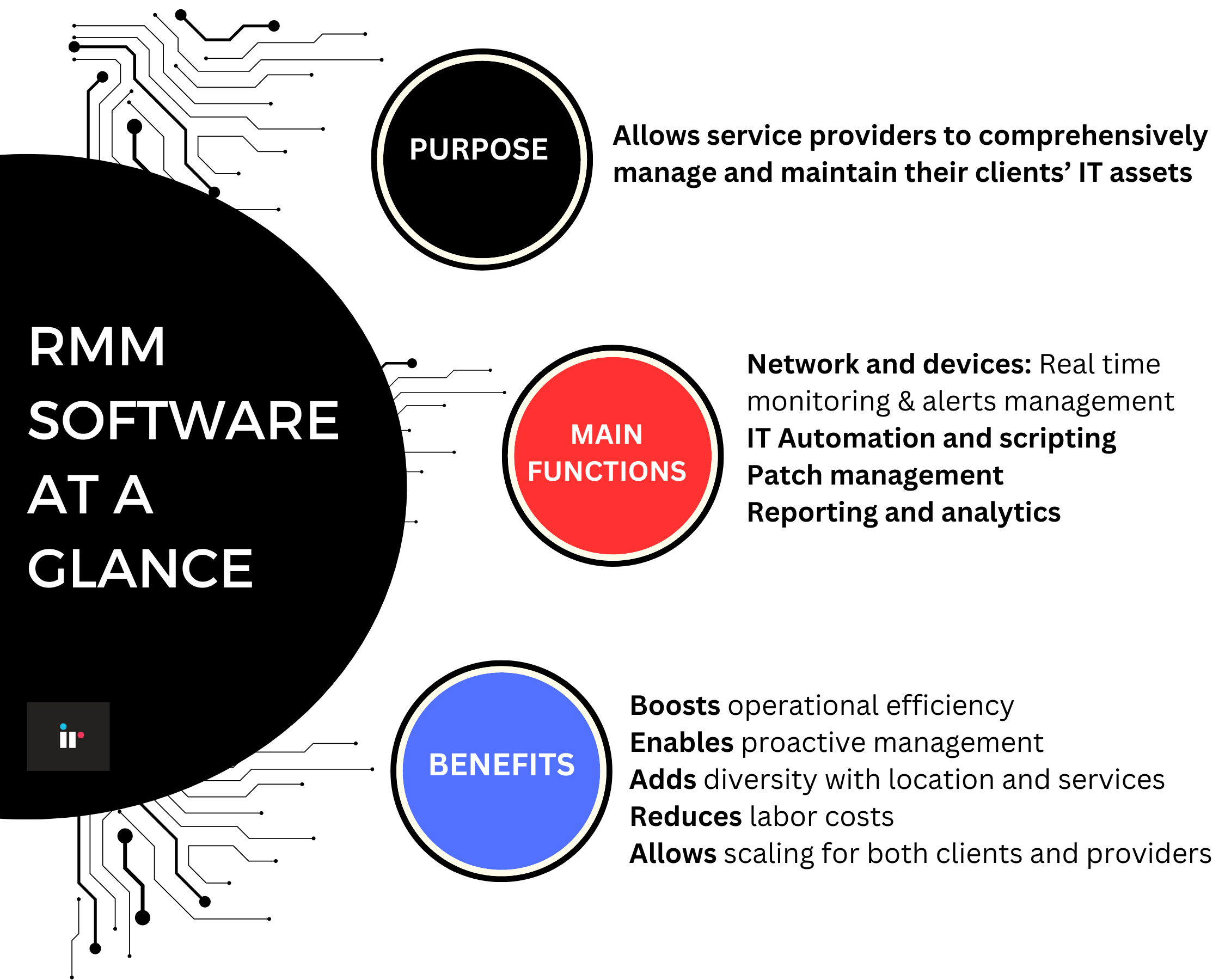
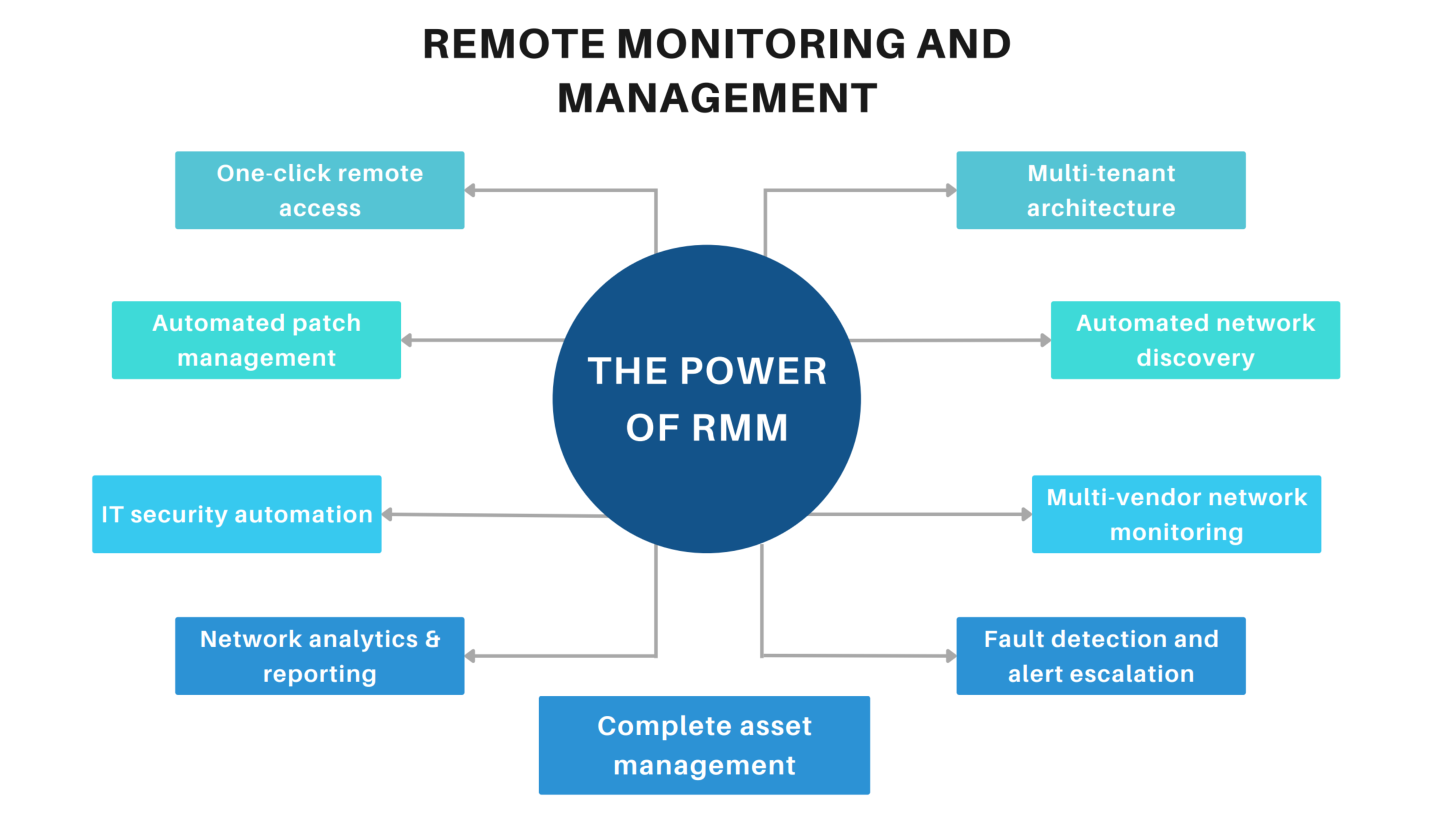
Remote Monitoring and Management (RMM) is a software solution used by IT service providers (MSPs) and internal IT departments to remotely monitor and manage client endpoints, networks, and servers. RMM tools provide real-time visibility into the health and performance of IT assets, allowing for proactive maintenance, automated patching, and remote troubleshooting. Key features of an RMM system include remote access, patch management, automated monitoring, alerting, and reporting.
The Power of Integration: CRM and RMM Working Together
The true potential of CRM and RMM is unlocked when these systems are integrated. This integration bridges the gap between customer-facing operations and the technical infrastructure that supports them, creating a unified view of the IT environment.
Enhanced Visibility and Control
Integrating CRM and RMM provides a single pane of glass for managing both customer relationships and IT assets. IT teams can see which assets are associated with specific customers, allowing them to prioritize support efforts and tailor solutions to meet individual customer needs. This enhanced visibility improves overall operational efficiency and reduces response times.
Proactive Problem Resolution
RMM systems constantly monitor IT assets for potential issues. When an issue is detected, the RMM system can automatically generate a ticket in the CRM system, alerting the IT team to the problem. This proactive approach allows IT teams to address issues before they impact customers, minimizing downtime and improving customer satisfaction. For example, if an RMM system detects that a customer’s server is running low on disk space, it can automatically create a ticket in the CRM system, prompting the IT team to investigate and resolve the issue before it causes a service disruption.
Improved Customer Service
With access to real-time asset information and historical support data, IT teams can provide faster and more effective customer service. When a customer calls with an issue, the IT team can quickly access the customer’s CRM record, view their associated IT assets, and see any recent alerts or support tickets. This comprehensive view allows them to diagnose the problem quickly and provide a targeted solution. Furthermore, the integration allows support staff to easily update the CRM record with details of the issue and its resolution, providing a complete audit trail for future reference.
Streamlined Asset Management
The integration of CRM and RMM streamlines the entire asset management lifecycle, from initial deployment to end-of-life decommissioning. When a new asset is deployed, the RMM system can automatically discover it and add it to the CRM system, ensuring that all assets are properly tracked and managed. The CRM system can also be used to track asset warranties, maintenance schedules, and software licenses, helping to prevent compliance issues and optimize asset utilization. When an asset reaches the end of its useful life, the CRM system can be used to initiate the decommissioning process, ensuring that it is properly removed from the network and disposed of securely.
Automated Reporting and Analytics
The integrated CRM and RMM system can generate comprehensive reports and analytics on IT asset performance, customer satisfaction, and support service efficiency. These reports can provide valuable insights into areas for improvement and help IT teams make data-driven decisions. For example, reports can identify common issues affecting specific customer segments, allowing IT teams to proactively address these issues and improve overall service quality. Analytics can also be used to track the effectiveness of different support strategies and identify areas where training or process improvements are needed.
Benefits of Integrating CRM and RMM
The benefits of integrating CRM and RMM extend far beyond improved IT asset management. Here’s a breakdown of the key advantages:
- Increased Efficiency: Automate tasks, reduce manual data entry, and streamline workflows.
- Improved Customer Satisfaction: Proactive problem resolution and faster response times lead to happier customers.
- Reduced Costs: Optimize asset utilization, minimize downtime, and prevent costly outages.
- Enhanced Security: Real-time monitoring and automated patching help protect against cyber threats.
- Data-Driven Decision Making: Comprehensive reporting and analytics provide valuable insights into IT performance.
- Improved Scalability: The integrated system can easily scale to accommodate business growth.
Implementation Strategies: Getting Started with CRM and RMM Integration
Implementing a successful CRM and RMM integration requires careful planning and execution. Here are some key considerations:
Define Clear Objectives
Before starting the integration process, it’s important to define clear objectives and identify the key areas you want to improve. Do you want to reduce response times? Improve customer satisfaction? Optimize asset utilization? Having clear objectives will help you choose the right integration approach and measure the success of the project. Streamlining workflows and enhancing efficiency often involves Crm Rmm Integration to connect sales and service operations
Choose the Right Tools
Select CRM and RMM solutions that are compatible with each other and offer the features you need. Look for solutions that offer pre-built integrations or APIs that allow you to connect the systems easily. Consider factors such as scalability, security, and ease of use when making your selection.
Plan the Integration Process
Develop a detailed integration plan that outlines the steps involved, timelines, and responsibilities. Involve key stakeholders from both the IT and customer service departments in the planning process. Consider starting with a pilot project to test the integration and identify any potential issues before rolling it out to the entire organization.
Data Migration and Cleansing
Migrate your existing data from your CRM and RMM systems to the integrated platform. Cleanse and standardize your data to ensure accuracy and consistency. This is a critical step in ensuring that the integrated system provides accurate and reliable information.
Training and Support
Provide comprehensive training to your IT and customer service teams on how to use the integrated system. Offer ongoing support to address any questions or issues that may arise. Ensure that your teams understand the benefits of the integration and how it can help them improve their performance.
Common Challenges and How to Overcome Them
While the benefits of CRM and RMM integration are significant, there are also some common challenges that businesses may face:
Data Silos
One of the biggest challenges is breaking down data silos between the CRM and RMM systems. This requires careful planning and execution to ensure that data is properly migrated and integrated. Use data mapping and transformation techniques to ensure that data is consistent and accurate across both systems.
Integration Complexity
Integrating CRM and RMM systems can be complex, especially if the systems are not designed to work together. Consider using a pre-built integration solution or working with a qualified integration partner to simplify the process. Managing customer relationships effectively often involves leveraging technology, where Cloud Based Crm offers a scalable and accessible solution
User Adoption
Getting users to adopt the new integrated system can be challenging, especially if they are used to working with separate systems. Provide comprehensive training and support to help users understand the benefits of the integration and how it can improve their performance. Involve users in the planning process to get their buy-in and address any concerns they may have. Optimizing customer relationships is crucial for success, Enterprises Switching Crm plays a vital role in achieving this goal
Security Concerns
Integrating CRM and RMM systems can raise security concerns, especially if sensitive customer data is being shared between the systems. Implement strong security measures to protect data from unauthorized access. Use encryption to protect data in transit and at rest. Regularly audit your security controls to ensure that they are effective.
The Future of IT Asset Management: Embracing Integration
The integration of CRM and RMM is not just a trend; it’s the future of IT asset management. As businesses become increasingly reliant on technology, the need for integrated solutions that provide real-time visibility and control over IT assets will only continue to grow. By embracing this integration, businesses can streamline their IT operations, improve customer satisfaction, and drive business growth. Emerging technologies like AI and machine learning will further enhance the capabilities of integrated CRM and RMM systems, enabling predictive maintenance, automated threat detection, and personalized customer experiences. The key is to start planning now and invest in the right tools and strategies to unlock the full potential of CRM and RMM integration. Looking ahead, The best CRM software in 2025 will likely prioritize AI-driven automation and hyper-personalization
.
Frequently Asked Questions (FAQ) about CRM and RMM for Smarter IT Asset Management
How can integrating a CRM (Customer Relationship Management) system with an RMM (Remote Monitoring and Management) platform improve IT asset management for my business?
Integrating a CRM with an RMM system significantly enhances IT asset management by providing a holistic view of your clients and their technology infrastructure. The RMM tools gather real-time data on hardware, software, and network performance, while the CRM stores client contact information, service agreements, and communication history. This integration allows you to proactively identify and resolve issues before they impact clients, improve service delivery, streamline billing, and personalize customer interactions. For example, knowing a client’s specific software versions and hardware configuration (from the RMM) when they call with a problem (logged in the CRM) allows for faster and more accurate troubleshooting. This ultimately leads to increased client satisfaction and operational efficiency.
What are the key benefits of using both CRM and RMM together specifically for managing software licenses and compliance across multiple client sites?
Using CRM and RMM platforms in tandem offers numerous benefits for managing software licenses and compliance. The RMM platform automatically discovers and tracks all installed software across client devices, providing a centralized inventory. This data can then be synced with the CRM, which stores license purchase information, expiration dates, and client-specific agreements. This integration allows for proactive license management, ensuring compliance and preventing costly penalties. You can easily identify expiring licenses, track usage, and generate reports for audits. Moreover, it helps prevent software sprawl and optimize license allocation, leading to significant cost savings. The combined visibility offered by CRM and RMM ensures that all client sites are using compliant and properly licensed software.
Besides cost savings, how can the combination of CRM and RMM help improve the overall security posture of my managed service provider (MSP) business and my clients’ IT infrastructure?
The integration of CRM and RMM significantly strengthens the security posture of both your MSP and your clients. The RMM platform provides real-time monitoring of security vulnerabilities, patch status, and potential threats across all managed devices. This information is then shared with the CRM, allowing you to proactively address security risks based on client priority and service agreements. For instance, if an RMM detects a critical vulnerability on a client’s server, the CRM can be used to quickly identify the client’s service level agreement and initiate the appropriate response. Moreover, the combined data allows for better security reporting, compliance tracking (e.g., HIPAA, GDPR), and vulnerability assessments. This proactive approach minimizes the risk of security breaches, reduces downtime, and builds trust with your clients, ultimately improving your MSP‘s reputation and protecting your clients’ valuable data.