
In today’s complex IT landscape, managed service providers (MSPs) and IT departments rely heavily on Remote Monitoring and Management (RMM) tools to proactively identify and resolve issues before they impact end-users. RMM platforms provide a wealth of technical data, alerting administrators to potential problems with servers, networks, and endpoints. However, these alerts often lack the crucial business context needed to prioritize and respond effectively. Without understanding the impact of a technical issue on a specific client, user, or business process, IT teams can waste valuable time chasing down low-priority alerts while more critical problems linger.
That’s where Customer Relationship Management (CRM) systems come into play. By integrating CRM data with RMM alerts and dashboards, IT teams gain a holistic view of their clients, enabling them to prioritize issues based on their business impact. This integration transforms raw technical data into actionable insights, allowing for faster resolution times, improved customer satisfaction, and a more efficient IT operation. Imagine knowing that a server outage is impacting a client’s critical e-commerce platform, versus simply knowing that a server is down. The former provides the urgency and context needed for immediate action.

This article will explore how CRM dashboards enhance the value of RMM events by providing essential business context. We will delve into the benefits of this integration, examine specific examples of how CRM data can inform RMM responses, and discuss the steps involved in implementing a successful CRM–RMM integration. Ultimately, we aim to demonstrate how combining these two powerful systems can transform your IT organization from a reactive problem-solver to a proactive business partner.
The Limitations of RMM Data in Isolation
RMM tools are indispensable for monitoring the health and performance of IT infrastructure. They collect a vast amount of data, including CPU usage, memory utilization, disk space, network latency, and application availability. When a threshold is breached, the RMM platform generates an alert, notifying IT staff of a potential problem. However, this data is often presented in isolation, lacking the context needed to understand the true impact of the issue.
Missing Business Context
Consider a scenario where an RMM system alerts you to high CPU usage on a server. While this alert indicates a potential problem, it doesn’t tell you:
- Which client is affected?
- What applications or services are running on the server?
- How critical are those applications to the client’s business operations?
- Is the client currently experiencing any other issues?
Without this context, IT staff must spend time investigating the issue, contacting the client, and gathering information before they can determine the appropriate course of action. This process can be time-consuming and inefficient, especially when dealing with multiple alerts simultaneously.
Challenges in Prioritization
RMM systems often generate a large volume of alerts, making it difficult to prioritize issues effectively. Without understanding the business impact of each alert, IT staff may end up focusing on less critical problems while more pressing issues are overlooked. This can lead to delays in resolving critical incidents, resulting in business disruption and customer dissatisfaction. For example, an alert about a printer being offline might seem less important than an alert about high CPU usage. However, if that printer is used for printing shipping labels in a busy warehouse, its downtime could have a significant impact on the client’s operations.
Reactive Problem Solving
Without the ability to proactively identify and address issues based on their business impact, IT teams are often forced to operate in a reactive mode. They spend their time responding to alerts and fixing problems after they occur, rather than preventing them in the first place. This reactive approach can be stressful for IT staff and frustrating for clients, who experience frequent disruptions to their business operations.
How CRM Dashboards Enhance RMM Events
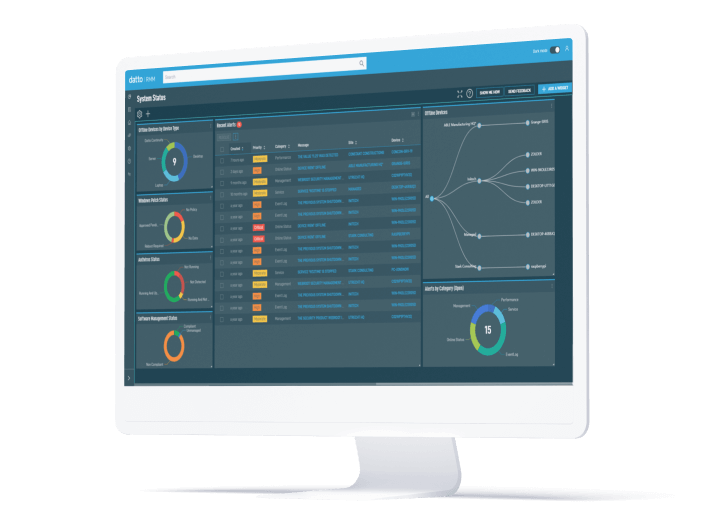
Integrating CRM data with RMM events provides the missing business context needed to prioritize issues effectively and proactively address potential problems. By presenting RMM alerts within the context of client information, IT teams can gain a clear understanding of the impact of each issue and respond accordingly.
Client-Centric View
CRM dashboards provide a centralized view of all client-related information, including:
- Client contact information
- Service level agreements (SLAs)
- Contracts and billing information
- Past support tickets and interactions
- Critical business processes and applications
By integrating RMM alerts with this client data, IT teams can immediately understand which client is affected by a particular issue and how critical that issue is to their business operations. For example, if an RMM alert indicates that a server is down, the CRM dashboard can show that the server hosts the client’s primary e-commerce platform and that the client has a high-priority SLA. This information allows IT staff to immediately prioritize the issue and take appropriate action.
Prioritization Based on Business Impact
CRM data can be used to prioritize RMM alerts based on their potential impact on the client’s business. For example, alerts related to critical applications or services can be automatically prioritized higher than alerts related to less important systems. This ensures that IT staff focus their attention on the issues that are most likely to cause business disruption or customer dissatisfaction. The CRM can also track key business metrics, such as revenue or customer satisfaction, and use these metrics to further prioritize alerts. For instance, an alert related to a server that supports a high-value customer might be prioritized higher than an alert related to a server that supports a less important customer. Considering these factors, The best CRM software in 2025 will likely focus on enhanced automation and predictive analytics
.
Proactive Problem Prevention
By analyzing historical RMM data in conjunction with CRM data, IT teams can identify trends and patterns that may indicate potential problems in the future. For example, if a particular client has experienced a series of recurring issues related to a specific application, IT staff can proactively investigate the root cause of the problem and implement preventative measures to avoid future disruptions. CRM data can also be used to identify clients who are at risk of churn or who have expressed dissatisfaction with their IT services. By proactively addressing these concerns, IT teams can improve customer satisfaction and reduce churn.
Examples of CRM Data Informing RMM Responses
Let’s explore some specific examples of how CRM data can inform RMM responses and improve IT operations.
Scenario 1: Server Outage
RMM Alert: Server is down. Ultimately, businesses discover that Crm Tools Improve customer relationship management and overall efficiency
Without CRM Integration: IT staff must investigate the issue, contact the client, and gather information to determine the impact of the outage.
With CRM Integration: The CRM dashboard shows that the server hosts the client’s primary e-commerce platform, that the client has a high-priority SLA, and that the client is currently running a major marketing campaign. This information allows IT staff to immediately prioritize the issue and take appropriate action to restore the server as quickly as possible.

Scenario 2: High CPU Usage
RMM Alert: High CPU usage on a server.
Without CRM Integration: IT staff must investigate the issue and determine the cause of the high CPU usage.
With CRM Integration: The CRM dashboard shows that the server hosts a critical database application used by the client’s sales team and that the sales team is currently experiencing slow response times. This information allows IT staff to quickly identify the cause of the high CPU usage and take steps to optimize the database performance.
Scenario 3: Disk Space Running Low
RMM Alert: Disk space running low on a server.
Without CRM Integration: IT staff must investigate the issue and determine which files are consuming the most disk space. Streamlining workflows and improving efficiency are key benefits of Crm Rmm Integration, allowing businesses to manage customer relationships and IT infrastructure from a single platform
With CRM Integration: The CRM dashboard shows that the server hosts the client’s file server and that the client is planning to launch a new product next week. This information allows IT staff to proactively increase the disk space on the server to avoid potential disruptions during the product launch.
Implementing a CRM–RMM Integration
Implementing a successful CRM–RMM integration requires careful planning and execution. Here are some key steps to consider:
Choosing the Right Tools
Select a CRM and RMM platform that offer robust integration capabilities. Many leading CRM and RMM vendors provide pre-built integrations or APIs that allow for seamless data exchange. Consider factors such as cost, features, scalability, and ease of use when choosing your tools.
Defining Integration Requirements
Clearly define the data that needs to be exchanged between the CRM and RMM systems. Determine which RMM alerts should trigger specific actions in the CRM, and which CRM data should be displayed on the RMM dashboard. Consider the types of reports and dashboards that you want to create based on the integrated data.
Configuring the Integration
Follow the vendor’s instructions to configure the integration between the CRM and RMM systems. This may involve installing plugins, configuring APIs, and mapping data fields. Ensure that the integration is properly tested to verify that data is being exchanged correctly.
Training IT Staff
Provide training to IT staff on how to use the integrated CRM–RMM system. Explain how to access and interpret the integrated data, and how to use this data to prioritize issues and improve IT operations. Emphasize the importance of using the CRM to document all client interactions and support activities. As businesses evolve, Next Gen Crm becomes a crucial tool for maintaining a competitive edge
Monitoring and Optimization
Continuously monitor the performance of the CRM–RMM integration and make adjustments as needed. Track key metrics such as resolution times, customer satisfaction, and proactive problem prevention. Use this data to identify areas for improvement and optimize the integration to maximize its value.
Conclusion
Integrating CRM dashboards with RMM events provides a powerful way to enhance the value of IT services. By providing essential business context, this integration enables IT teams to prioritize issues effectively, proactively prevent problems, and improve customer satisfaction. While implementing a CRM–RMM integration requires careful planning and execution, the benefits are well worth the effort. By transforming raw technical data into actionable insights, this integration can help your IT organization become a more strategic and valuable business partner.
In today’s competitive IT landscape, providing exceptional customer service is critical for success. By leveraging the power of CRM and RMM integration, you can gain a significant advantage over your competitors and deliver superior IT services that drive business growth.
So, take the first step towards a more proactive and customer-centric IT operation by exploring the possibilities of CRM–RMM integration. Your clients, and your bottom line, will thank you for it.
Frequently Asked Questions (FAQ) about How CRM Dashboards Provide Better Context for RMM Events
Why is it important to integrate my CRM and RMM tools, and how do CRM dashboards enhance the understanding of RMM generated alerts?
Integrating your Customer Relationship Management (CRM) and Remote Monitoring and Management (RMM) tools is crucial for a holistic view of your clients and their IT environments. RMM tools generate alerts about potential issues, but without CRM data, these alerts lack context. A CRM dashboard, integrated with RMM, provides this context. For example, an RMM alert indicating high CPU usage on a server is just a technical issue. However, if the CRM shows that the client is currently experiencing a peak season for their business, or that a recent software update was deployed, you immediately have a much better understanding of the potential cause and impact. This integration allows for prioritized remediation, improved communication with the client, and ultimately, better customer service by proactively addressing issues before they significantly impact the client’s operations. This streamlined approach reduces downtime and improves overall client satisfaction.
What specific client information from a CRM can be displayed on a dashboard to provide better context for RMM events, and what are the benefits of having this information readily available?
Several key pieces of client information from a CRM can significantly enhance the context of RMM events when displayed on a unified dashboard. This includes: client contact details (phone, email), service level agreements (SLAs), contract terms, hardware and software inventory, recent support tickets, project status, and even notes from recent client interactions. Having this information readily available allows technicians to quickly understand the client’s environment, the priority of the alert based on the SLA, and any ongoing projects that might be affected. For instance, knowing that a server experiencing issues is part of a critical project deadline allows for immediate escalation and focused troubleshooting. Furthermore, understanding the client’s hardware and software inventory helps diagnose compatibility issues or identify outdated systems contributing to the problem. This contextual awareness leads to faster resolution times, more informed communication with the client, and reduced risk of service disruptions.
How can using a CRM dashboard that integrates with RMM help improve communication with clients regarding IT issues detected by RMM tools?
A CRM dashboard integrated with RMM empowers you to have more informed and effective communication with clients about IT issues. Instead of simply stating a technical problem detected by the RMM, you can provide context that resonates with the client’s business. For example, instead of saying “Your server is experiencing high CPU usage,” you can say, “We’ve detected that your server is experiencing high CPU usage, which may be impacting the performance of [Specific Application] that you use for [Specific Business Function], especially as you are approaching your month-end reporting deadline. We are actively investigating and will keep you updated.” This level of detail demonstrates that you understand their business needs and are proactively addressing potential disruptions. Additionally, the CRM data allows you to personalize the communication, ensuring it’s directed to the appropriate contact person and tailored to their level of technical understanding. This proactive and informed communication builds trust and strengthens client relationships, reinforcing the value of your IT services.